Insights, tutorials, and best practices for managing your lab with LabFluent.
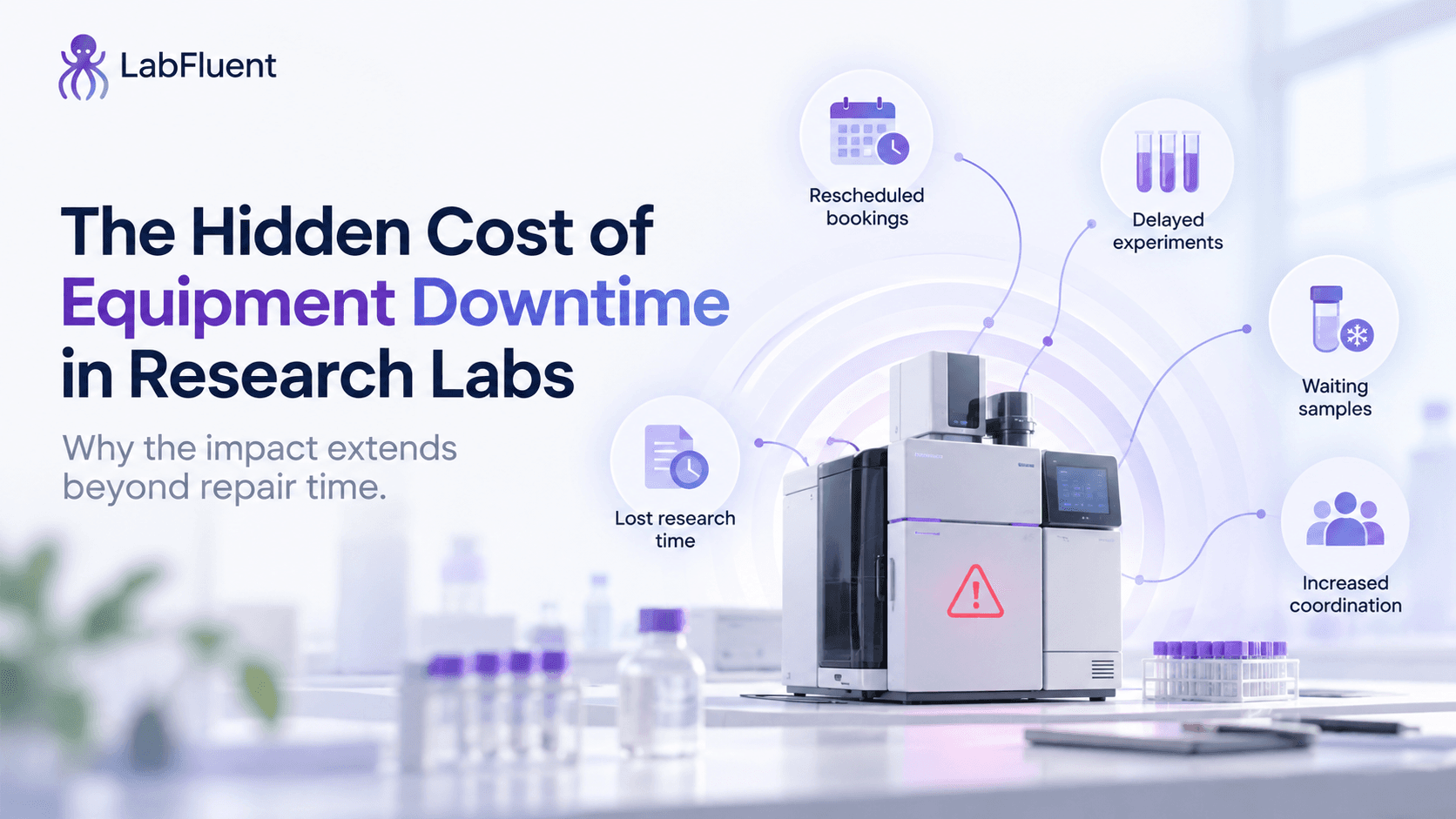
Equipment downtime costs more than repair time. Learn how unavailable instruments create hidden coordination work, rescheduling and research friction.
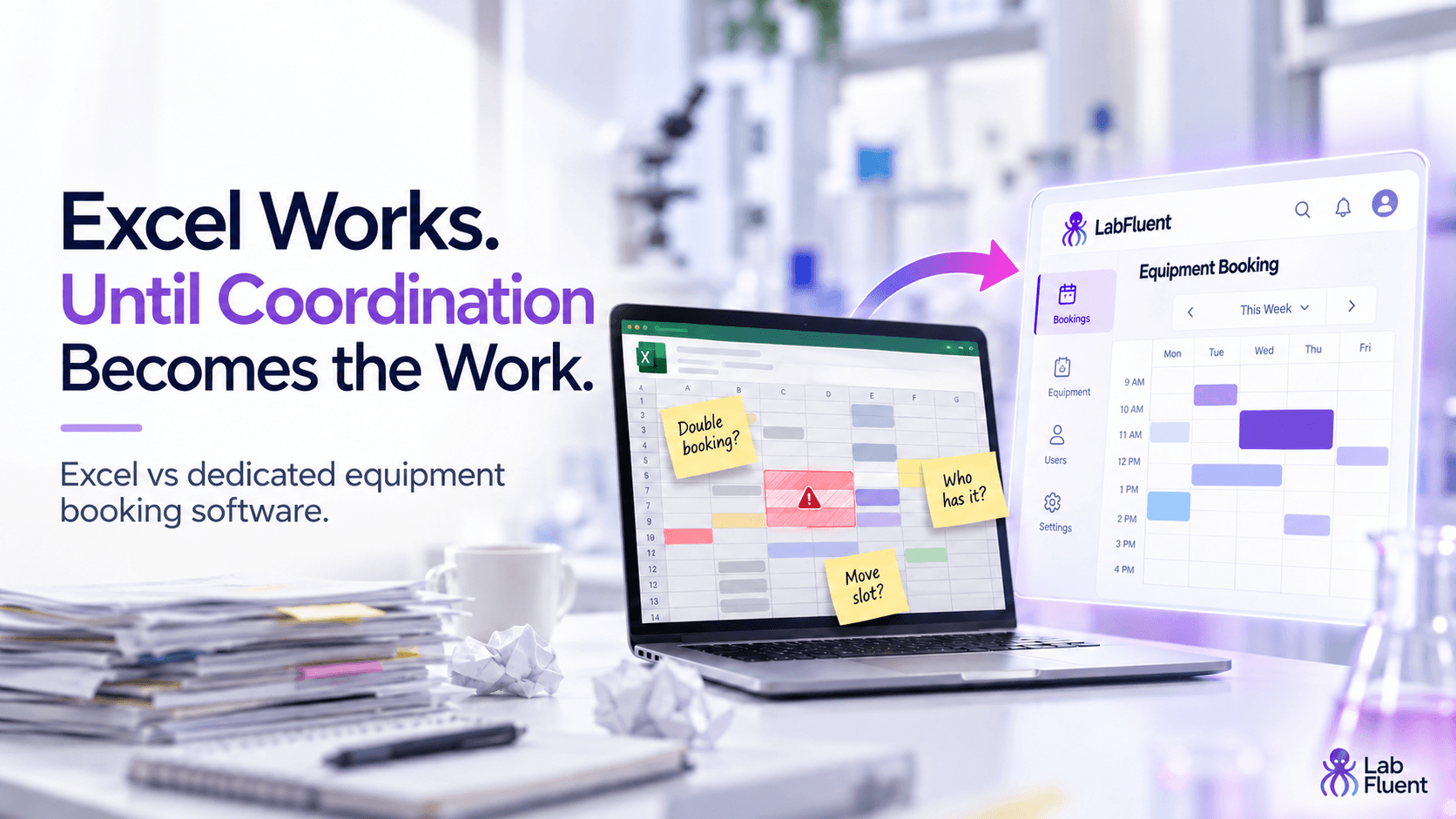
When does Excel stop being enough for lab equipment booking? Learn what changes as shared equipment, users and coordination needs grow.
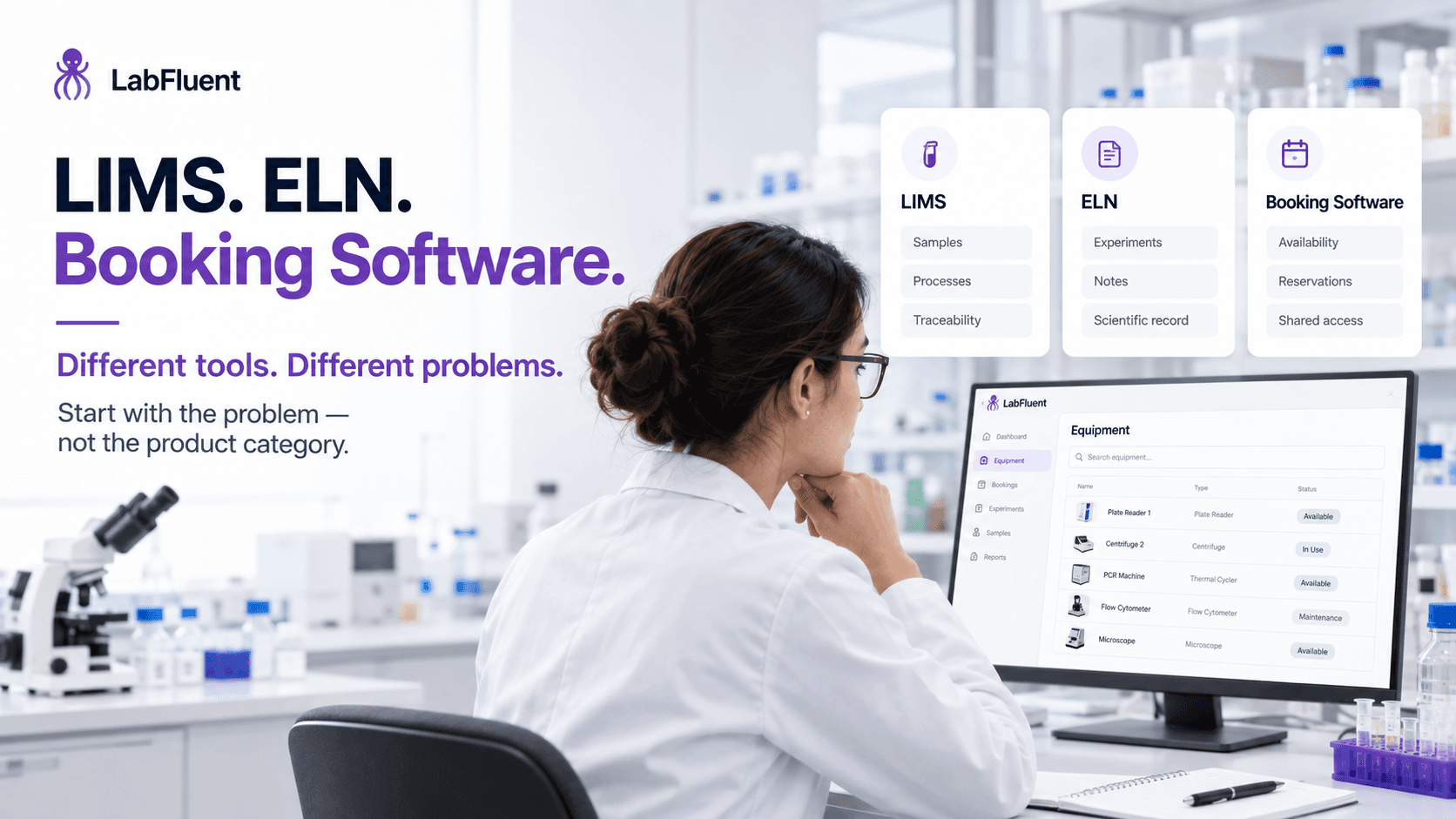
Understand the differences between laboratory equipment booking software, LIMS and ELN systems, and learn which type of lab problem each is designed to solve.
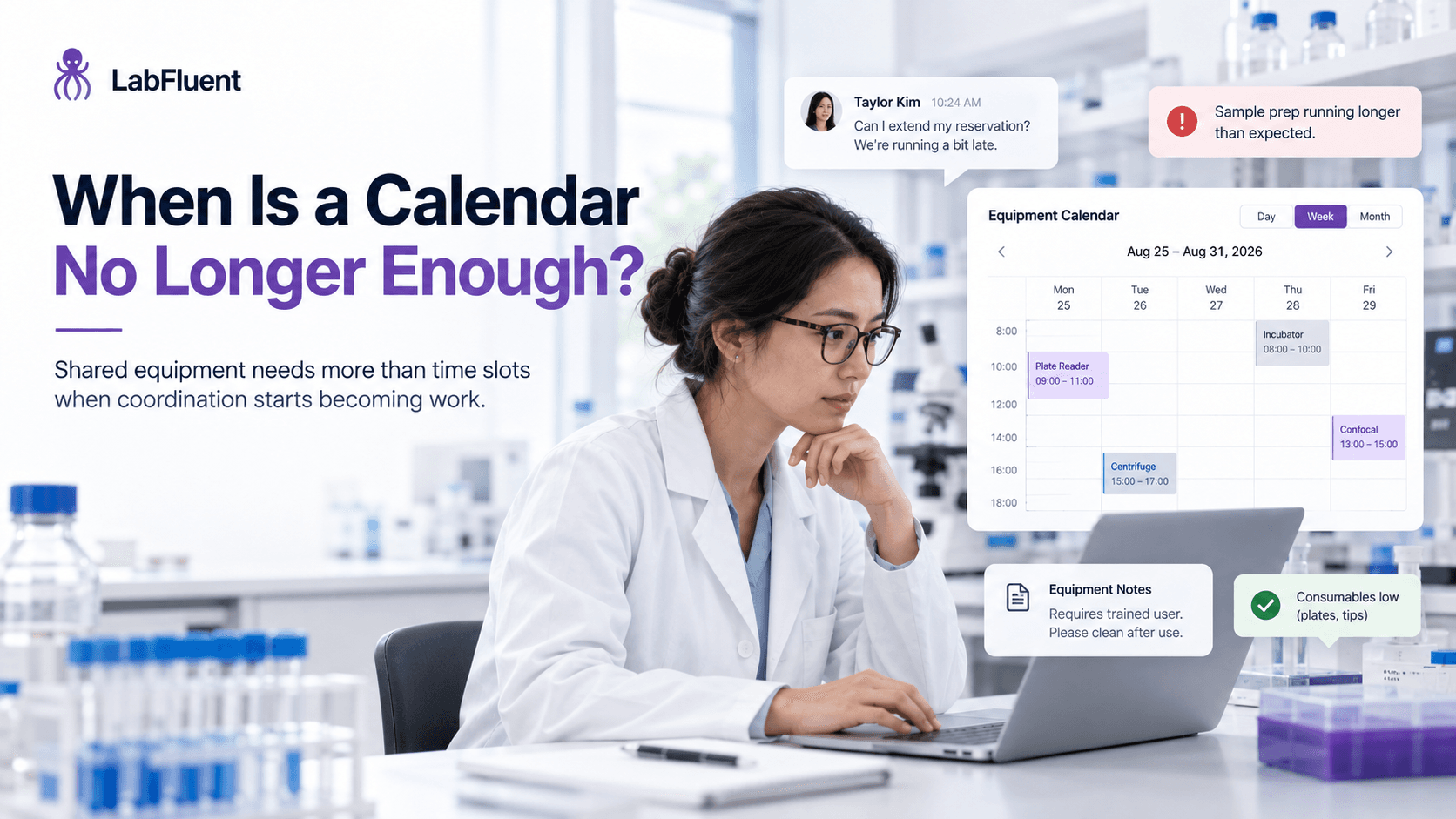
Learn when shared calendars stop being enough for laboratory equipment booking and which signs suggest your lab may need a dedicated system.
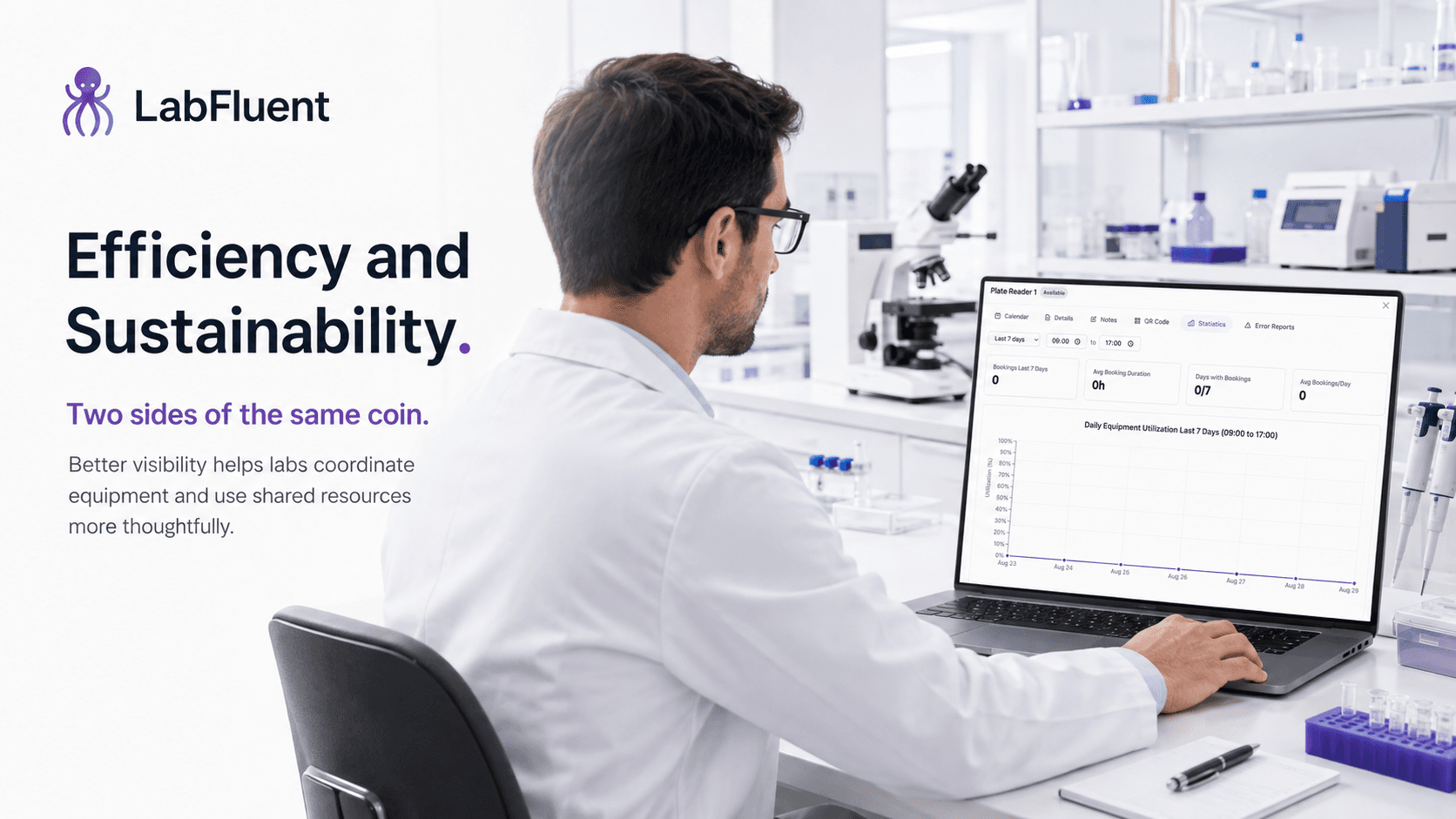
Explore how equipment sharing, visibility and better lab operations can support both research efficiency and more thoughtful resource use.
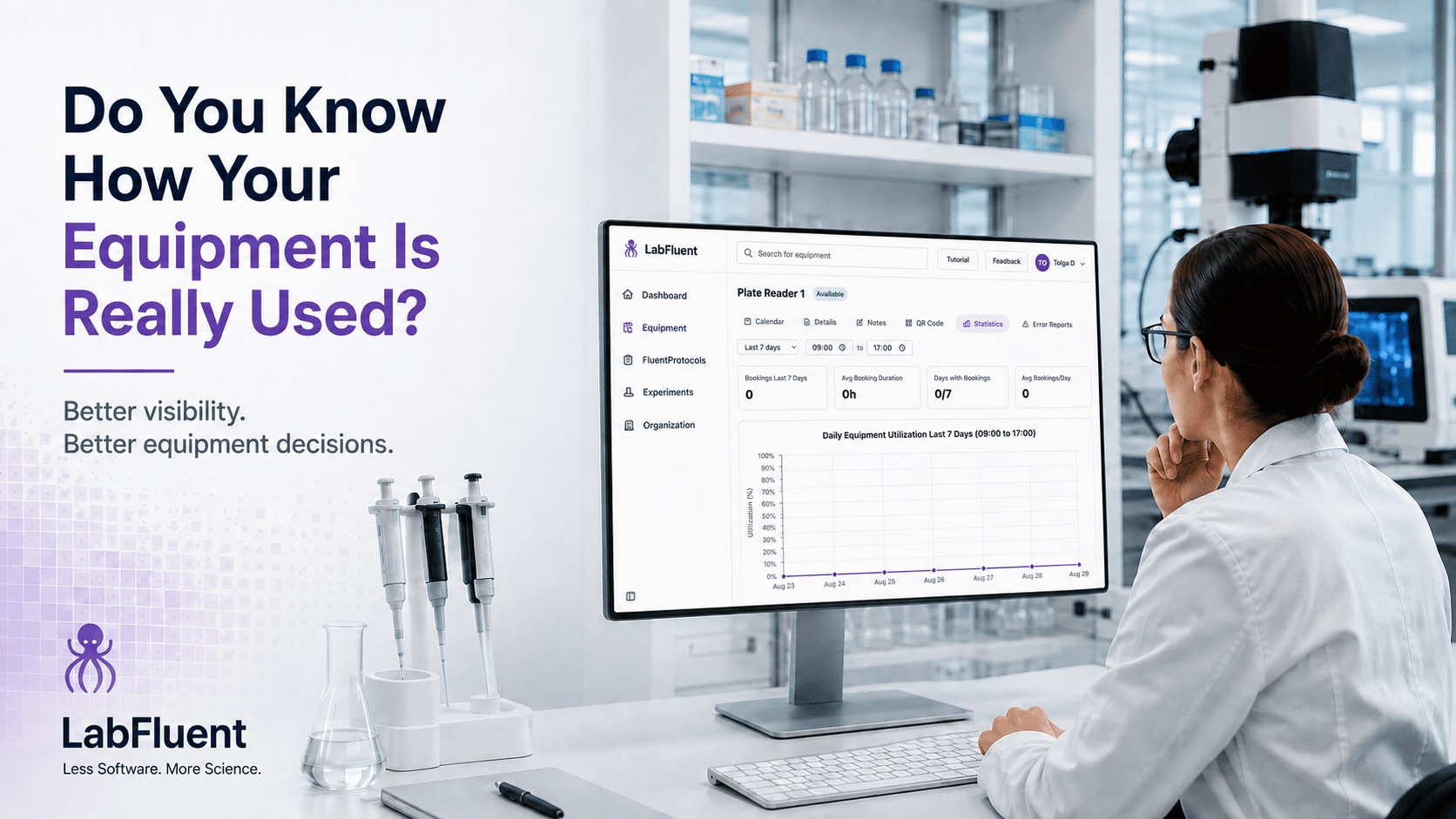
Learn five practical equipment utilization metrics that can help lab managers understand demand, downtime, booking patterns and shared equipment use.
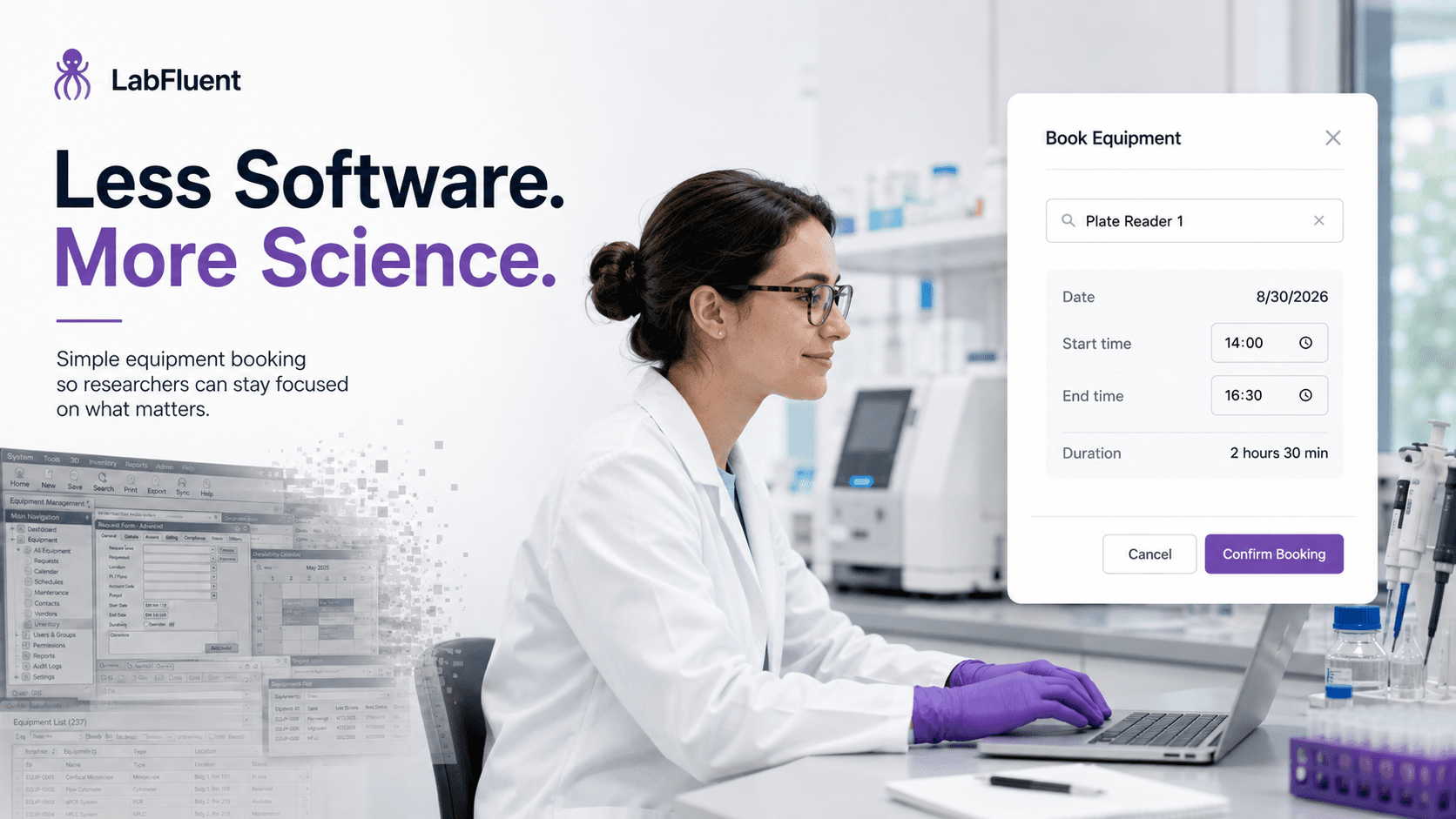
Discover why lightweight laboratory software can reduce research friction, simplify workflows, and give researchers more time to focus on science.

Every scientist knows the feeling: you have a clear plan for your experiment, but the logistics of the lab seem determined to slow you down. This is not just "admin work", it is Research Friction — the cumulative weight of all the small, logistical hurdles that stand between a researcher and their data.

In the world’s most advanced laboratories, we are using multimillion-dollar liquid handlers and high-resolution mass spectrometers and to manage these equipment we often use is the almighty yellow Post-it note that says: "Broken—Do Not Use."

Scientific research has reached the 21st century, but laboratory operations are lagging behind. While techniques like CRISPR and AI-driven protein folding are cutting-edge, the infrastructure supporting them often relies on manual spreadsheets and paper logs. This "Century Gap" creates significant talent waste, slowing down the global pace of discovery